The Sacred Seat of Emotions, Creativity & Life-Flow
In Vedic wisdom, the human body is seen as a microcosm of the universe. Just as rivers flow across the earth, prana—the life force—flows across our inner landscape. Among the seven major energy centres that govern this flow, the Swadhisthana Chakra, often called the “Seat of the Self,” plays a central role in shaping desires, creativity, sexuality, emotional balance, and the joy of living.
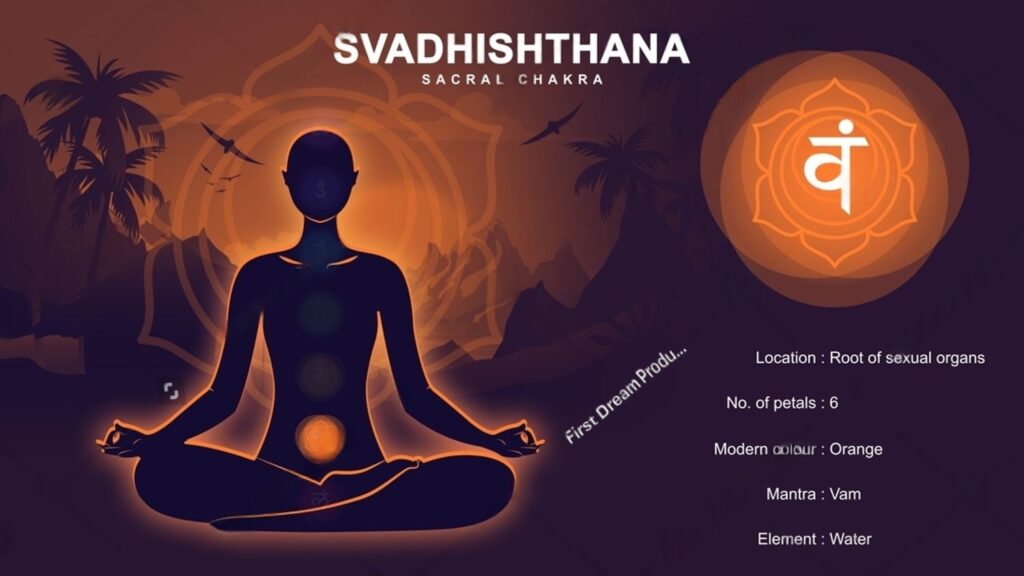
Located below the navel in the pelvic region, Swadhisthana governs the subtle water element (Apas Tattva), illustrating how emotions, like water, can either nourish or flood us.
“As water shapes the shoreline, emotions shape the human soul.”
In today’s high-stress world, imbalances in this chakra show up as emotional instability, relationship patterns, mood fluctuations, and even creative blocks. Understanding its Vedic roots and scientific relevance empowers you to regain flow, harmony and joy.
What is the Swadhisthana Chakra?
The word Svadhisthana comes from two Sanskrit roots:
- Sva = One’s own
- Adhisthana = Abode or seat
Thus, Swadhisthana means “the dwelling place of the Self”—the center where identity, emotions, pleasure, and creativity arise.
It is depicted as a six-petalled lotus with a crescent moon, symbolising flow, cycles and sensitivity.
Tantra Shastras
Tantric texts describe Swadhisthana as the seat of unconscious impressions (Samskaras) and deep desires (Vasana Shakti). It is where past emotional patterns are stored.
Upanishadic Hints
While chakras are elaborated in later Tantric works, the Upanishads mention Apana Vayu, the downward-moving life force responsible for elimination, reproductive energy, and grounding—functions governed by Swadhisthana.
Vedic Symbolism of Water Element (Apas)
Apas represents:
- flow
- nourishment
- fertility
- adaptability
- emotional intelligence
Swadhisthana is the human echo of this cosmic water element.
“The one who masters Apas masters emotional flow.”
Deities
- Bhagwati Rakini Devi – representing emotional strength, clarity and divine feminine grace.
- Varuna – deity of water, representing purification and fluidity.
Scientific Significance of the Swadhisthana Region
Modern science validates many ancient observations:
Pelvic Plexus (Sacral Nerve Plexus)
This area contains a dense network of nerves regulating:
- Reproductive organs
- Bladder
- Lower digestive system
- Emotional regulation through the autonomic nervous system
Swadhisthana’s “emotional sensitivity” aligns with this region’s neurological complexity.
Hormonal Influence
The chakra’s domain corresponds to reproductive glands:
- Ovaries / Testes
These secrete hormones like estrogen, testosterone and progesterone—directly affecting mood, desire, emotional bonding, and creativity.
Role in Creativity
Studies show that the dopamine reward system—linked to creativity, pleasure and emotional expression—is active in the regions tied to sacral energy.
Water Content in the Body
Humans are 70% water, and emotional turbulence immediately impacts hydration levels, digestion, and circulation—mirroring the chakra’s water symbolism.
“Emotion is not just felt spiritually; it is a biochemical wave inside you.”
How Swadhisthana Chakra Influences Your Life
Emotional Stability
- Balanced Swadhisthana = calm, intuitive, expressive
- Imbalanced Swadhisthana = mood swings, fear of rejection, emotional dependence
Creativity & Imagination
Artists, writers, designers, and spiritual seekers rely heavily on this chakra for inspiration.
Sexuality & Intimacy
Healthy Swadhisthana promotes conscious sensuality, not impulsive desire.
Relationships
Your emotional response pattern—clinginess or detachment—arises from this chakra.
Joy & Pleasure
Ability to celebrate life, enjoy small moments, and feel alive is Swadhisthana’s gift.
Symptoms of an Imbalanced Swadhisthana Chakra
Emotional Signs
- low confidence in relationships
- Fear of abandonment
- Feeling undeserving of love
- Difficulty expressing emotions
- Over-sensitivity
- Guilt around desires
- Emotional numbness
Physical Signs
- Lower back pain
- Reproductive issues
- Urinary problems
- Hormonal imbalances
- Menstrual irregularities
- PCOS/PCOD tendencies
- Low libido or excessive libido
Spiritual Signs
- Blocked intuition
- Lack of creative inspiration
- Difficulty meditating
- Feeling “disconnected from oneself”
The River Within
Imagine a river flowing through the valley.
- If the river flows freely → the valley is fertile.
- If the river floods → the land is destroyed.
- If the river dries → the valley cracks.
Your Swadhisthana chakra is this river within you.
When balanced, you feel:
- Emotionally nourished
- Creative
- Joyful
- Connected
- Expressive
When blocked, the same energy becomes:
- Fear
- Emotional heaviness
- Compulsions
- Confusion
- Creative drought
Swadhisthana Chakra in Modern Life
In relationships:
Today’s fast-paced world creates emotional burnout. People are physically close but emotionally distant. This leads to overthinking, over-attachment and fear of losing the partner.
At work:
Creative stagnancy, lack of motivation, and burnout are signs of sacral exhaustion.
In mental health:
Anxiety, emotional volatility, and over-reactivity often stem from sacral imbalances.
“You cannot pour from an empty cup. Swadhisthana teaches you to refill.”
Solutions to Balance Swadhisthana Chakra
Water Rituals (Apas Healing)
Fire is purified by water; similarly emotions are purified by conscious water rituals.
- Drink warm water in the morning
- Sit near rivers/lakes
- Take mindful showers
- Offer water to Sun (Arghya)
Japa & Mantra Healing
The Bija Mantra of this chakra is “Vam”. Chanting creates vibrations that stimulate the pelvic plexus.
- Om Varunaya Namah
- Om Rakinyai Namah
Yoga Asanas
- Bhujangasana
- Mandukasana
- Baddha Konasana
- Upavistha Konasana
- Hip-opening flows
These poses increase blood flow and pranic movement in the pelvic region.
Mudras
- Yoni Mudra (activates divine feminine energy)
- Shakti Mudra
Aroma & Colour Therapy
- Orange colour
- Jasmine, sandalwood, ylang-ylang oils
Food for Swadhisthana
Water-rich foods:
- Coconut water
- Melons
- Oranges
- Pumpkin
- Almonds
Emotional Work
- Journaling
- Inner-child healing
- Forgiveness meditation
- Creative expression (art, dance, writing)
The Story of Goddess Ganga
Ganga is the ultimate symbol of purity, flow and nourishment.
Devotees believe that when emotions become turbulent, meditating on the flow of Ganga purifies inner waters.
Just as Bhagiratha brought Ganga down to Earth through devotion, awareness brings healing energy to Swadhisthana.
“Healing Swadhisthana is not about controlling emotions, but learning to flow with them.”
Powerful Quotes for Swadhisthana Chakra
- “Emotion is the water of the soul—keep it flowing, keep it pure.”
- “When your inner river flows freely, creativity becomes effortless.”
- “Swadhisthana teaches you to feel without drowning, to love without losing yourself.”
- “Your emotions are not your weakness; they are your compass.”
ESSENCE
The Swadhisthana chakra is not merely an energy point—it is the foundation of emotional intelligence, creativity, sensuality and joy. In a world filled with emotional noise and pressure, healing this chakra reconnects you with your deepest essence.
Balancing Swadhisthana means reclaiming your right to feel, to create, to love, and to experience life fully.
It anchors you in emotional strength and spiritual flow.
“To balance Swadhisthana is to reclaim the sweetness of being alive.”